Reflection Session
£85
- Bring whatever’s on your mind about your practice
- Focused conversation with someone who gets it
- Perfect for a specific question or challenge
- Summary with follow-up actions sent afterwards

For creative practitioners working in the early years
A space where you can talk openly about your practice with someone who gets it – because I’ve been doing this work for over 20 years.

If you’re feeling isolated, exhausted, or wondering if your work even matters – you’re not alone. Creative practice in early years can be lonely. You’re constantly justifying what you do. You’re burnt out from trying to secure funding, navigate partnerships, or figure out how to actually make this work sustainable.
And sometimes you just need to talk to someone who gets it.
It’s thinking deeply about what you’re doing and why. Not surface-level chat – proper questioning about your practice, those memorable moments, what worked, what didn’t, and what you might do differently.
At Cocoon, Megan and I spend up to an hour after each session unpicking every detail – how the child responded, what we noticed, where the magic happened, what we’ll try next time. This reflection feeds into our plan-do-review cycles and keeps our practice sharp.
But here’s the thing: most practitioners don’t have this. You’re on your own, trying to reflect in snatched moments between sessions, without anyone to ask the questions that help you see what’s really happening.
I’ve been doing creative work with young children for over 20 years. I understand the joy of creating magical moments with children and the soul-destroying confusion of Arts Council England applications (currently in that hell myself). I know what it’s like to set up a CIC, secure funding, and work in partnership with settings that don’t always get what you do.
Through careful questioning, practitioners often discover what’s really happening in their practice and find their own solutions. I don’t tell you what to do – I help you see it yourself.
I also share sector knowledge and signpost you to funding streams, support services, and entitlements you might not know exist. Sometimes just knowing what’s available changes everything.
Every reflection session you book supports Cocoon – a music and movement playspace for individual families. Kate and Megan create unhurried time and space for families to play and connect with their two-year-old, following the child’s lead and interests. A break from day-to-day stress where you might even get a lie down.
Online sessions take place on Google Meet. Visits happen in person at Cocoon in North Shields.
£85
£120
£150
In-person experience
£350
Perfect for DYCP grant holders

I’m Kate, and I’ve spent over 20 years working creatively with young children and the practitioners who support them. Currently developing revolutionary practice with 2-year-olds through Cocoon, funded by Youth Music’s Energiser Fund.
I understand the unique challenges of creative practice in early years – the constant justification, the isolation, the exhaustion of advocating for what you know works. I’ve been there.
My approach is unhurried, supportive, and grounded in real experience.
I won’t give you quick fixes or theory from textbooks. Instead, I offer genuine understanding and space to explore what’s really going on in your practice.
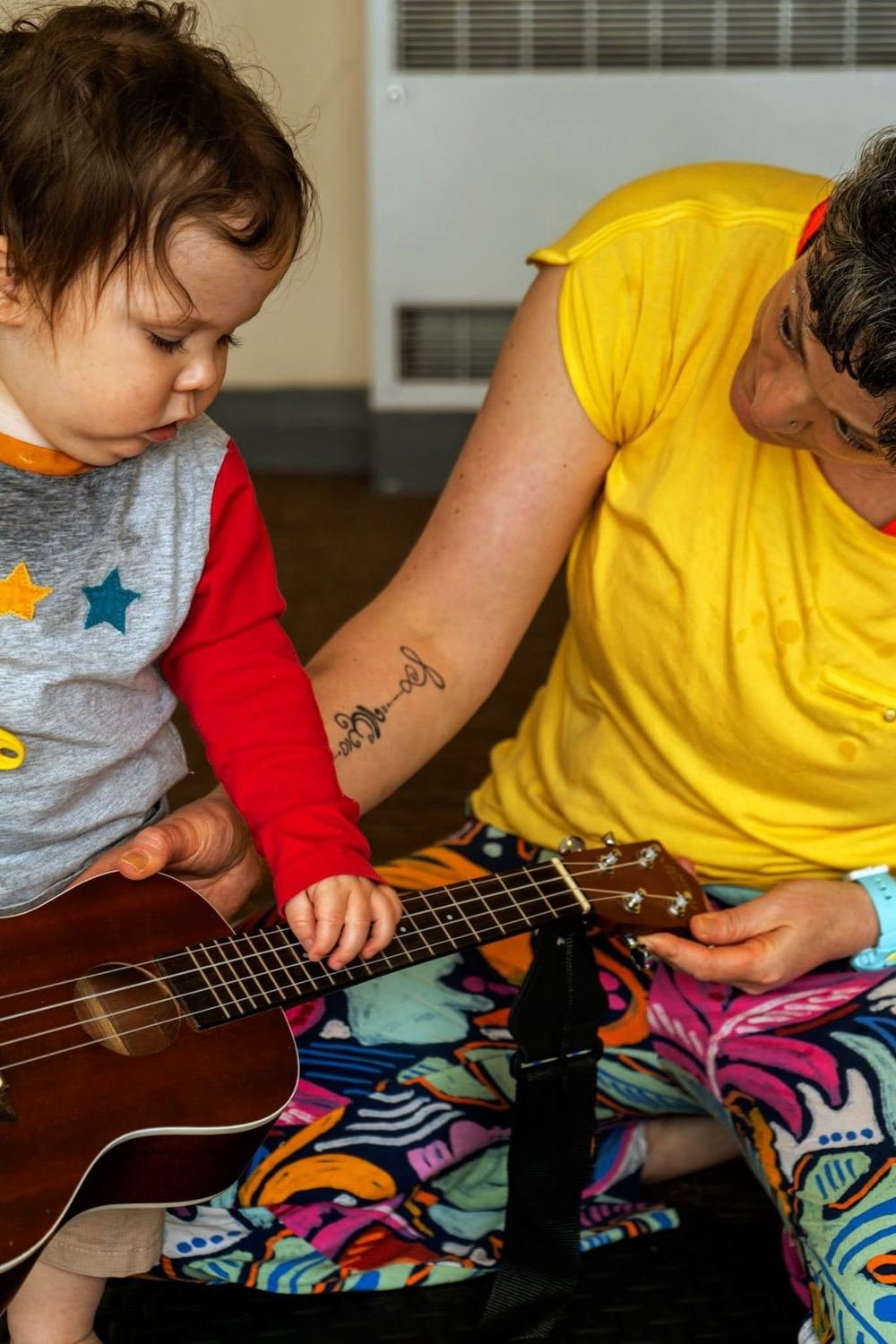
This moment captures the heart of my work – true attunement with a child exploring music. The quiet concentration, the gentle guidance, the shared discovery.
This is what I understand deeply – how to hold space, when to wait, when to respond. The exhaustion of maintaining this level of presence. The joy when connection happens. This is the understanding I bring to our reflective conversations.
Hi Kate – I just wanted to say I had the BEST sessions ever!!! Everything you said clicked into place. Thank you, thank you, thank you xx.
“Kate – you were amazing and just what I needed. Honestly, so inspiring! I did make some notes and am all set to put them into practice on Tuesday at my sessions.”
“It can be an isolating role. I think achieving clarity comes from actually verbalising my critical thought process and the potential barriers at any one time!”